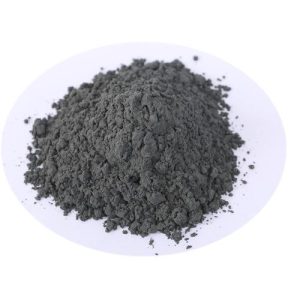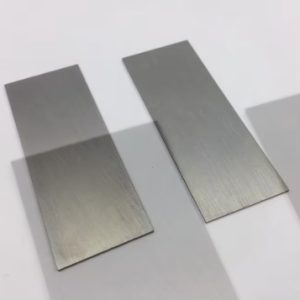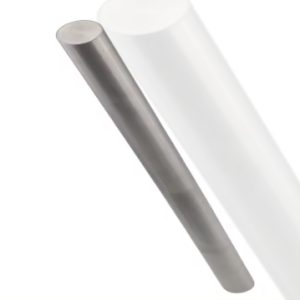
Overview of Full set titanium anode and cathode electrode for saline chlorination cell
チタン (Ti) is a chemical element with the atomic number 22 and is symbolized as Ti on the periodic table. It belongs to the transition metals group and is known for its low density, high strength-to-weight ratio, and exceptional corrosion resistance. Discovered in 1791 by William Gregor, titanium has become a vital material across numerous industries due to its unique combination of properties.
Feature of Full set titanium anode and cathode electrode for saline chlorination cell
-
Low Density and High Strength: Titanium is about 45% lighter than steel but possesses similar strength, making it ideal for applications where weight reduction is critical without compromising strength.
-
Corrosion Resistance: It forms a passive oxide layer that protects the underlying metal from corrosive substances, including sea water and chlorine, making it highly resistant to corrosion.
-
Biocompatibility: Titanium is well-tolerated by the human body and doesn’t cause adverse reactions, which is why it’s widely used in medical implants and surgical instruments.
-
耐熱性: With a melting point of 1,668°C (3,034°F), titanium can withstand high temperatures, making it suitable for aerospace and automotive applications.
-
Non-Magnetic and Non-Toxic: These properties make titanium ideal for applications in MRI machines and other sensitive electronic devices.
-
Fatigue Resistance: Titanium demonstrates excellent resistance to metal fatigue, crucial in cyclic loading applications such as aircraft parts.
.
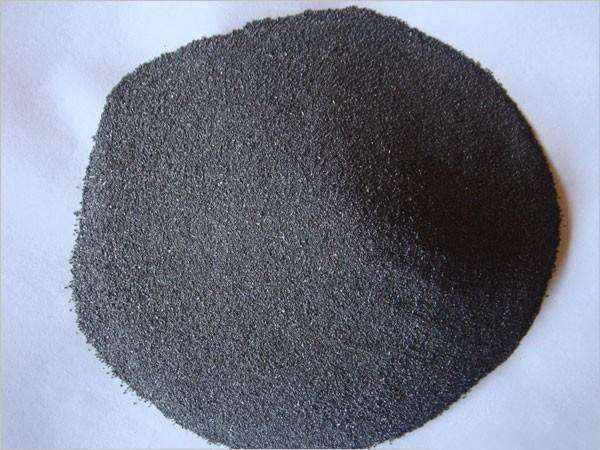
(Full set titanium anode and cathode electrode for saline chlorination cell)
Parameters of Full set titanium anode and cathode electrode for saline chlorination cell
The parameters of a saline chlorination cell will depend on several factors, including the concentration of salt in the solution, the voltage applied to the electrode, and the amount of time spent at each cell state.
Here are some general values that can be used as a starting point:
– Temperature: usually between 20°C and 30°C (depending on the cell type and operating conditions)
– Electrode length: typically around 15 cm (excluding the cathode) or more for positive electrode and 8 cm (excluding the anode) for negative electrode
– Solvent: the type of solution used for the chlorination process
– State of charge: the initial state of charge of the and any other compounds present in the solution
– Current drawdown: the amount of current required to power the cell and remove the remaining salt from the solution
– Control system settings: such as pH control, temperature control, and voltage control
– Electrolyte type: the desired electrolyte composition and any other parameters specific to the cell type.
It’s important to note that these values are just guidelines and may need to be adjusted depending on the specific requirements of your chlorideination cell. Additionally, it’s important to perform regular inspections and maintenance of the equipment to ensure its proper functioning.
(Full set titanium anode and cathode electrode for saline chlorination cell)
会社概要
メタルマミーは信頼できる世界的な化学材料サプライヤーです & 超高品質の銅および関連製品の提供において12年以上の経験を持つメーカー.
当社には専門技術部門と品質監督部門があります。, 設備の整った研究室, 高度な試験設備とアフターサービスセンターを備えています.
高品質の金属粉末および関連製品をお探しなら, お気軽にお問い合わせいただくか、必要な製品をクリックして問い合わせを送信してください.
支払い方法
信用状, T/T, ウエスタンユニオン, ペイパル, クレジットカードなど.
出荷
船便で発送可能です, 飛行機で, または返済受領後できるだけ早く明らかにすることによって.
FAQ
(Full set titanium anode and cathode electrode for saline chlorination cell)