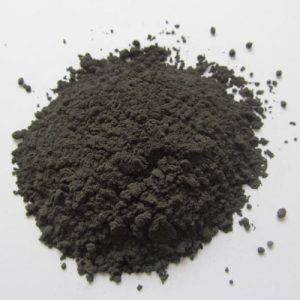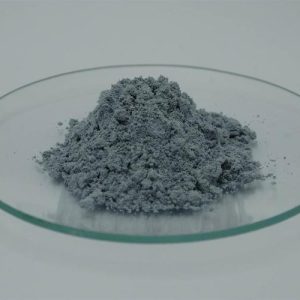
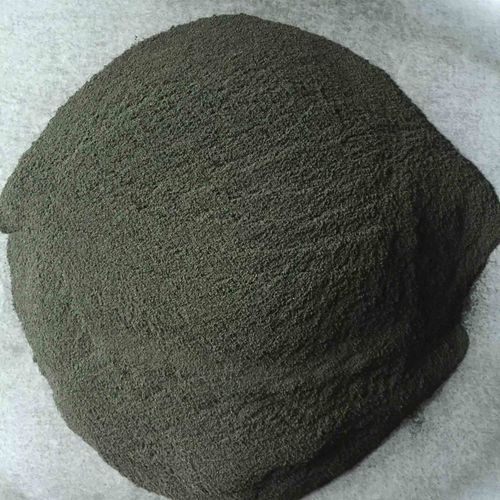
Overview of Calcium Metal
Calcium Metal comprises a broad category of finely divided, solid particles derived from various metals or metal alloys. These powders exhibit unique characteristics that make them indispensable in modern manufacturing and advanced technologies.
Key Characteristics of Calcium Metal
-
Particle Size and Distribution: The size and uniformity of particles significantly influence flowability, packing density, and the final product’s mechanical and physical properties. Finer powders generally offer a larger surface area, which is beneficial for reactions and sintering but may also increase aggregation.
-
Composition: Metal powders can be elemental (pure metal) or alloyed, combining two or more metals to achieve desired properties such as enhanced strength, corrosion resistance, or electrical conductivity.
-
Shape: Particle shapes range from spherical to irregular or flake-like. Spherical powders provide better flowability and packing, while flake-shaped powders are suited for coatings and electronic applications due to their unique orientation and surface area.
-
Purity: Depending on the application, metal powders can be highly purified to remove impurities, critical for uses in electronics, aerospace, and medical devices where contamination could compromise performance.
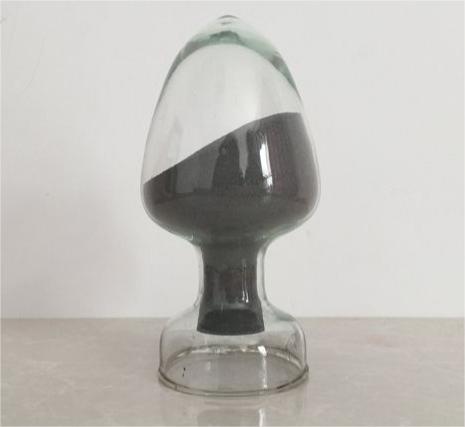
(Calcium Metal)
Parameters of Calcium Metal
Calcium is a chemical element with the symbol Ca and atomic number 20. It is an alkaline earth metal found in the second column of the periodic table. Here are some key parameters for calcium:
1. Atomic Properties:
– Symbol: 칼슘
– Atomic Number: 20
– Atomic Mass: 40.078 u (unified atomic mass units)
– Electron Configuration: [Ar] 4s²
2. 물리적 특성:
– Appearance: Soft, silvery-white metal
– 녹는점: 842°C (1547°F)
– 비등점: 1484°C (2703°F)
– 밀도: 1.54 g/cm³ at room temperature
– Hardness: Low (on the Mohs scale, it’s about 2.5)
– Specific Heat: 0.91 J/(g·°C)
3. Chemical Properties:
– Reactivity: Moderately reactive, reacts with water to form calcium hydroxide (slaked lime) and hydrogen gas.
– Oxidation States: Most commonly +2 (as in calcium oxide, CaO), but can also exhibit +1 and +4 under certain conditions.
– Corrosion Resistance: Not highly resistant to corrosion, especially in moist environments.
4. Occurrence:
– Calcium is the fifth most abundant element in the Earth’s crust, making up about 3.6% by weight.
– It is found in minerals such as limestone, marble, and dolomite.
5. Applications:
– Dietary essential mineral: Humans need calcium for strong bones and teeth, muscle function, and nerve transmission.
– Industrial uses: In the production of cement, glass, and as a desiccant in drying agents; as a flux in smelting metals; and in various alloys.
– Biological role: Important in plant growth and development.
These are just a few key parameters; for more detailed information, please let me know.
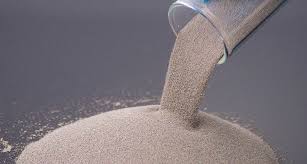
(Calcium Metal)
회사 프로필
Metal Mummy는 신뢰받는 글로벌 화학소재 공급업체입니다. & 12년 이상의 경험을 바탕으로 초고품질의 동 및 관련 제품을 생산하는 제조업체.
회사에는 전문 기술 부서와 품질 감독 부서가 있습니다., 시설이 잘 갖춰진 실험실, 첨단 테스트 장비와 애프터 서비스 센터를 갖추고 있습니다..
고품질의 금속분말 및 관련제품을 찾고 계시다면, 언제든지 저희에게 연락하시거나 필요한 제품을 클릭하여 문의사항을 보내주세요..
결제 방법
신용장, 티/티, 웨스턴 유니온, 페이팔, 신용카드 등.
선적
그것은 바다로 발송될 수 있었습니다, 비행기로, 또는 상환 영수증이 나오는 대로 최대한 빨리 공개하십시오..
FAQs of Calcium Metal
Q1. What exactly is Calcium Metal, and how is it different from solid metal?
Calcium Metal consists of tiny particles of pure metals or metal alloys. Unlike solid metal, which exists as a continuous mass, metal powder offers increased surface area, making it more reactive and easier to form into complex shapes through processes like sintering or 3D printing.
Q2. How is Calcium Metal produced, and what are the common production methods?
Calcium Metal is typically produced through several methods, including:
– Atomization: Molten metal is sprayed into fine droplets that cool and solidify into powder.
– Chemical reduction: Metal oxides are reduced to their elemental state to form powder.
– Electrolysis: Electrical current is used to deposit metal onto a cathode, later harvested as powder.
– Mechanical processes: Large metal pieces are milled or ground down into powder.
Q3. What factors determine the quality and suitability of metal powders for different applications?
Quality and suitability depend on factors like:
– Particle size and distribution: Affects flowability, packing density, and final product properties.
– Composition and purity: Determines the material’s properties and its appropriateness for specific uses.
– Shape: Spherical powders for better flow, flake shapes for coatings.
– Density and porosity: Influences strength and other mechanical properties.
Q4. What safety precautions should be taken when handling metal powders?
Safety measures include:
– Wearing personal protective equipment (PPE) like gloves, 고글, and respirators.
– Storing powders in airtight containers away from moisture, heat, and ignition sources.
– Using explosion-proof equipment in processing areas.
– Ensuring proper ventilation to avoid dust accumulation and inhalation risks.
– Following strict handling procedures to prevent spills and cross-contamination.
Q5. How are Calcium Metal used in the manufacturing industry?
Calcium Metal find applications in:
– Powder Metallurgy: To create parts by compacting and sintering, ideal for mass production of complex components.
– 적층 가공 (3D Printing): Layer-by-layer construction of parts for customized and intricate designs.
– Thermal Spray Coatings: Applying protective or functional coatings to surfaces for corrosion resistance, 등.
– Electronics: Precious metal powders in conductive pastes, connectors, and other components.
– Chemical and Catalyst Industries: As catalysts due to their high surface area, promoting chemical reactions.
Q6. Are Calcium Metal recyclable or reusable?
예, Calcium Metal can often be recycled or reused. Unused powder or scrap from manufacturing processes can frequently be collected, reprocessed, and reintroduced into production cycles, contributing to sustainable manufacturing practices.
Q7. How does the cost of Calcium Metal compare to traditional metal forms?
The cost depends on factors like the metal type, production method, and purity. While Calcium Metal may initially seem more expensive due to additional processing, their efficiency in certain manufacturing processes (like producing complex shapes with minimal waste) can lead to overall cost savings.

(Calcium Metal)