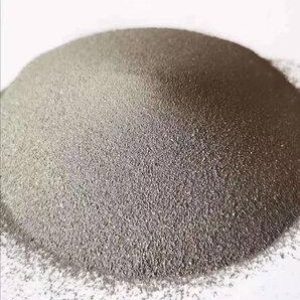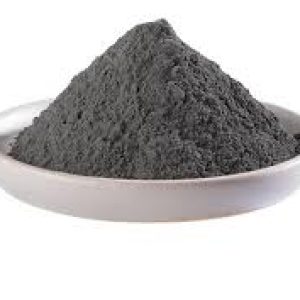
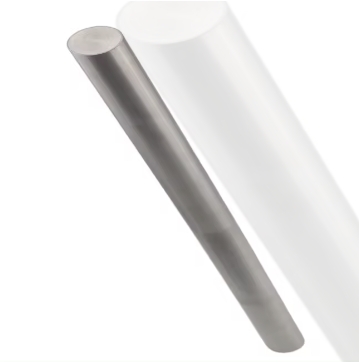

Overview of Customized Niobium Titanium Alloy (Nb-Ti) superconducting wire
Niobio, often found in conjunction with tantalum minerals, is primarily extracted as a byproduct of tin and tantalum mining. Its chief ores include pyrochlore and columbite. Once refined, niobium becomes highly versatile, finding application in alloys, superconductors, and various high-tech materials.
Feature of Customized Niobium Titanium Alloy (Nb-Ti) superconducting wire
-
Superior Strength and Lightness: When added to steel in small quantities (typically less than 1%), niobium significantly enhances the strength and toughness of the alloy while reducing its weight, making it ideal for aerospace and automotive applications.
-
Corrosion Resistance: Like tantalum, niobium forms a passive oxide layer that protects it from corrosion, making niobium-based alloys suitable for use in harsh environments.
-
Superconductivity: Niobium exhibits excellent superconducting properties when cooled below its critical temperature of about 9.2 K (-264°C or -443°F). This property makes it the primary material for superconducting magnets used in MRI scanners and particle accelerators.
-
Magnetic Properties: Niobium is paramagnetic at room temperature but becomes strongly diamagnetic when cooled, meaning it repels magnetic fields. This characteristic is exploited in certain specialized applications.
-
Ease of Fabrication: Despite its strength, niobium is easily formed, welded, and machined, facilitating its use in complex engineering designs.

(Customized Niobium Titanium Alloy (Nb-Ti) superconducting wire)
Parameters of Customized Niobium Titanium Alloy (Nb-Ti) superconducting wire
Customized Niobium Titanium (NbTi) alloy superconducting wires typically have several key parameters that determine their performance, quality, and suitability for specific applications. Here are some of the main parameters you may find in a NbTi superconducting wire:
1. **Critical Temperature (Tc)**: The temperature below which the wire exhibits superconductivity, usually around 9.2 K (-263.95°C) for pure NbTi. Customization might involve optimizing this for specific cooling systems.
2. **Critical Current Density (Jc)**: The maximum current that can flow through the wire without resistance. Higher Jc is desired for applications requiring high current capacity. Custom Jc values can be achieved by varying the wire’s microstructure, such as grain size or alloy composition.
3. **Electrical Resistivity (ρ)**: Superconductors have zero electrical resistance, but at very low temperatures, there might be a residual resistivity due to impurities or defects. Custom NbTi wires could have lower residual resistivity for improved performance.
4. **Mechanical Properties**: Strength, ductility, and flexibility are important for handling and integration into devices. Custom wires might have specific mechanical properties tailored to withstand certain stresses or deformation requirements.
5. **Konduktividat Termiko (κ)**: Good thermal conductivity helps maintain the superconducting state by efficiently transferring heat away from the wire. Custom NbTi wires can be optimized for better thermal management.
6. **Microstructure**: The wire’s microstructure, including grain size and crystallographic orientation, affects its superconducting properties. Customization may involve controlled processes like annealing or twinning to enhance performance.
7. **Diameter and Coiling Capacity**: Wire diameter determines the ease of handling and integration into devices, while coiling capacity refers to how many turns can be made before the wire becomes too fragile. Custom sizes can be produced to meet specific application needs.
8. **Manufacturing Process**: Different manufacturing techniques, such as powder-in-tube (PIT), tape-based (Rutherford or Bi-2212), or multifilamentary (e.g., PIT HTS), can affect the wire’s performance and cost. Custom NbTi wires might use one of these processes or a proprietary method.
9. **Grade**: NbTi wire grades can range from standard commercial purity (CP) to higher purity (HP) materials, with different properties and cost implications.
These parameters can be tailored to suit specific applications, such as fusion reactors, MRI machines, particle accelerators, or power transmission lines. When requesting a customized NbTi wire, it’s essential to communicate your requirements clearly to the manufacturer.

(Customized Niobium Titanium Alloy (Nb-Ti) superconducting wire)
Profil di e kompania
Metal Mummy ta un proveedó di material kímiko mundial di konfiansa & fabrikante ku mas ku 12 aña di eksperensia den suministro di produktonan di koper i parientenan di kalidat super haltu.
E kompania tin un departamentu tékniko profeshonal i un departamentu di supervishon di kalidat, un laboratorio bon ekipá, i ekipá ku ekipo di tèst avansá i sentro di servisio na kliente despues di benta.
Si bo ta buskando polvo di metal di kalidat haltu i produktonan relativo, por fabor sinti bo liber pa tuma kontakto ku nos òf klik riba e produktonan nesesario pa manda un konsulta.
Métodonan di Pago
L/C, T/T, Western Union, Paypal, Tarheta di krédito etc.
Envio
E por wòrdu enviá via laman, pa aire, òf dor di revelá ASAP asina ku risibí e pago bèk.
FAQ

(Customized Niobium Titanium Alloy (Nb-Ti) superconducting wire)