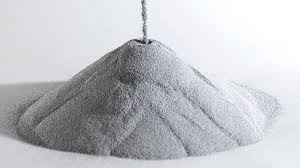

Overview of Manganese Powder
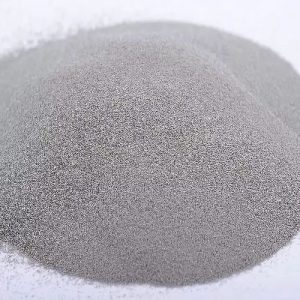
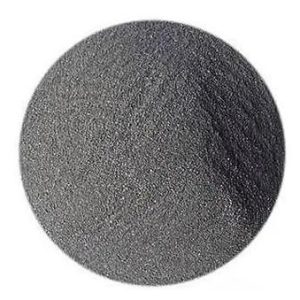
Manganese Powder comprises a broad category of finely divided, solid particles derived from various metals or metal alloys. These powders exhibit unique characteristics that make them indispensable in modern manufacturing and advanced technologies.
Key Characteristics of Manganese Powder
-
Particle Size and Distribution: The size and uniformity of particles significantly influence flowability, packing density, and the final product’s mechanical and physical properties. Finer powders generally offer a larger surface area, which is beneficial for reactions and sintering but may also increase aggregation.
-
Composition: Metal powders can be elemental (pure metal) or alloyed, combining two or more metals to achieve desired properties such as enhanced strength, corrosion resistance, or electrical conductivity.
-
Shape: Particle shapes range from spherical to irregular or flake-like. Spherical powders provide better flowability and packing, while flake-shaped powders are suited for coatings and electronic applications due to their unique orientation and surface area.
-
Purity: Depending on the application, metal powders can be highly purified to remove impurities, critical for uses in electronics, aerospace, and medical devices where contamination could compromise performance.
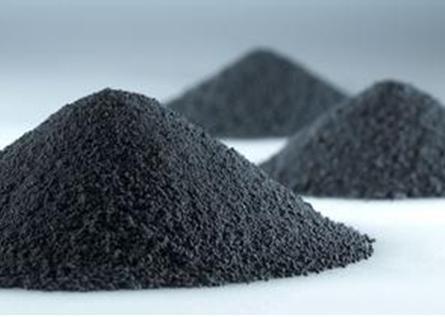
(Manganese Powder)
Parameters of Manganese Powder
Manganese powder, also known as manganese dioxide (MnO2) or other manganese compounds, is a fine powder form of the element manganese used in various applications. Here are some key parameters that describe manganese powder:
1. **Chemical Composition:** The primary compound is manganese dioxide (MnO2), but impurities may be present depending on the purity grade. High-purity manganese powders can have a purity level above 99% Mn.
2. **Particle Size Distribution (PSD):** Particle size is crucial for its application, and it’s typically measured in micrometers (μm). Common particle sizes range from less than 50 μm to several hundred μm. A narrow PSD indicates a more consistent particle size, which affects reactivity and performance.
3. **Área de Superfície Específica (SSA):** This parameter represents the total surface area per unit mass of the powder. Higher SSA means more surface area available for chemical reactions, making it important in catalysts and absorbers.
4. **Bulk Density:** The amount of material contained in a given volume. It’s typically expressed in grams per cubic centimeter (g/cm³).
5. **Melting Point and Boiling Point:** Manganese dioxide has a melting point around 801°C (1474°F) and decomposes before reaching a boiling point.
6. **Packing Density:** The theoretical maximum density of the powder when packed together without any air gaps, usually lower than bulk density due to voids between particles.
7. **Reactivity:** Depending on the purity and preparation method, manganese powder can exhibit different reactivities. For example, higher purity grades are less reactive but more stable.
8. **Form:** Manganese powder is generally available in the form of granules, submicron particles, or micron-sized powders.
9. **Applications:** Manganese powder is used in batteries (lithium-ion batteries), pigments, catalysts, flame retardants, water purification, and various industrial processes.
Please note that specific parameters may vary depending on the supplier and the intended use of the manganese powder. To get detailed information, it’s best to consult with the manufacturer or supplier.

(Manganese Powder)
perfil de companhia
Metal Mummy é um fornecedor global confiável de materiais químicos & fabricante com mais de 12 anos de experiência no fornecimento de produtos de cobre e parentes de altíssima qualidade.
A empresa possui um departamento técnico profissional e um departamento de supervisão de qualidade, um laboratório bem equipado, e equipado com equipamentos de teste avançados e centro de atendimento ao cliente pós-venda.
Se você está procurando pó metálico de alta qualidade e produtos relativos, não hesite em contactar-nos ou clicar nos produtos necessários para enviar uma consulta.
Métodos de pagamento
L/C, T/T, Western Union, PayPal, Cartão de crédito etc..
Remessa
Poderia ser enviado por mar, de avião, ou revelando o mais rápido possível assim que o recebimento do reembolso.
FAQs of Manganese Powder
Q1. What exactly is Manganese Powder, and how is it different from solid metal?
Manganese Powder consists of tiny particles of pure metals or metal alloys. Unlike solid metal, which exists as a continuous mass, metal powder offers increased surface area, making it more reactive and easier to form into complex shapes through processes like sintering or 3D printing.
Q2. How is Manganese Powder produced, and what are the common production methods?
Manganese Powder is typically produced through several methods, including:
– Atomization: Molten metal is sprayed into fine droplets that cool and solidify into powder.
– Chemical reduction: Metal oxides are reduced to their elemental state to form powder.
– Electrolysis: Electrical current is used to deposit metal onto a cathode, later harvested as powder.
– Mechanical processes: Large metal pieces are milled or ground down into powder.
Q3. What factors determine the quality and suitability of metal powders for different applications?
Quality and suitability depend on factors like:
– Particle size and distribution: Affects flowability, packing density, and final product properties.
– Composition and purity: Determines the material’s properties and its appropriateness for specific uses.
– Shape: Spherical powders for better flow, flake shapes for coatings.
– Density and porosity: Influences strength and other mechanical properties.
Q4. What safety precautions should be taken when handling metal powders?
Safety measures include:
– Wearing personal protective equipment (EPI) like gloves, óculos de proteção, and respirators.
– Storing powders in airtight containers away from moisture, heat, and ignition sources.
– Using explosion-proof equipment in processing areas.
– Ensuring proper ventilation to avoid dust accumulation and inhalation risks.
– Following strict handling procedures to prevent spills and cross-contamination.
Q5. How are Manganese Powder used in the manufacturing industry?
Manganese Powder find applications in:
– Powder Metallurgy: To create parts by compacting and sintering, ideal for mass production of complex components.
– Fabricação Aditiva (3D Printing): Layer-by-layer construction of parts for customized and intricate designs.
– Thermal Spray Coatings: Applying protective or functional coatings to surfaces for corrosion resistance, etc..
– Electronics: Precious metal powders in conductive pastes, connectors, and other components.
– Chemical and Catalyst Industries: As catalysts due to their high surface area, promoting chemical reactions.
Q6. Are Manganese Powder recyclable or reusable?
Sim, Manganese Powder can often be recycled or reused. Unused powder or scrap from manufacturing processes can frequently be collected, reprocessed, and reintroduced into production cycles, contributing to sustainable manufacturing practices.
Q7. How does the cost of Manganese Powder compare to traditional metal forms?
The cost depends on factors like the metal type, production method, and purity. While Manganese Powder may initially seem more expensive due to additional processing, their efficiency in certain manufacturing processes (like producing complex shapes with minimal waste) can lead to overall cost savings.

(Manganese Powder)