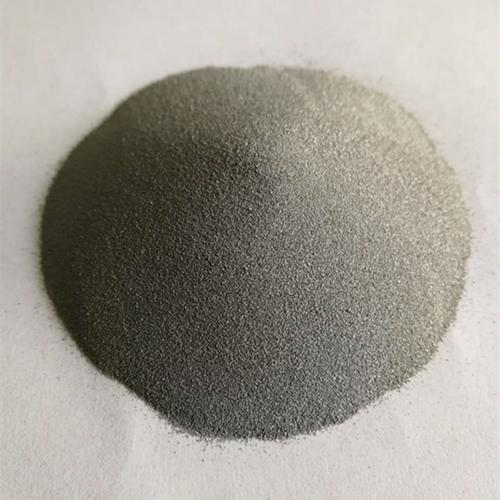
1. Introduction
In a significant development reported just 48 hours ago, the U.S. Department of Commerce announced new export controls on high-purity titanium metal powder due to its strategic importance in aerospace and defense 3D printing applications. This move underscores the growing global demand for advanced titanium powders and highlights supply chain sensitivities affecting titanium powder price and availability worldwide.
Titanium powder—often referred to as Ti powder—is a critical enabler of modern manufacturing, especially in additive manufacturing (AM), metallurgy, and specialty coatings. Unlike bulk titanium, powdered forms offer unique advantages in sintering, alloying, and precision fabrication. However, not all titanium powders are created equal. Variations in purity, particle morphology, and chemical composition dramatically influence performance and cost.
2. Types of Titanium Powder and Their Applications
Pure titanium powder serves as the foundation for many industrial uses, including pyrotechnics (e.g., titanium flash powder) and chemical synthesis. In contrast, titanium alloy powder—particularly Ti6Al4V (also known as Ti64)—dominates the aerospace and medical implant sectors due to its superior strength-to-density ratio and biocompatibility.
Specialty titanium-based powders extend functionality beyond structural uses:
- Titanium nitride powder and titanium carbide powder are employed in wear-resistant coatings and cutting tools.
- Titanium diboride (TiB2) powder and titanium boride powder find roles in ceramic composites and neutron absorbers.
- TiO2 powder, especially in nano form (TiO2 nano powder), is widely used in sunscreens, paints, and photocatalysis—not to be confused with metallic titanium powder.
- TiH2 powder acts as a foaming agent in metal matrix composites and a hydrogen source in powder metallurgy.
It’s important to distinguish titanium metal powder from non-metallic derivatives like burnt titanium powder coat or titanium dioxide formulations used in cosmetics and food.
3. Production Methods: Gas Atomization vs. HDH

Two primary methods dominate commercial titanium powder production: gas atomization and the hydride-dehydride (HDH) process.
Gas atomized titanium powder yields spherical particles ideal for titanium powder additive manufacturing. The spherical morphology ensures excellent flowability and packing density—critical for consistent layer deposition in 3D printing. Consequently, spherical titanium powder commands a premium, especially for titanium powder for 3D printing applications.
In contrast, HDH titanium powder produces irregular, angular particles at a lower cost. While less suitable for high-end AM, HDH powder is widely used in traditional powder metallurgy, welding consumables, and as a raw material for further processing.
Emerging techniques, such as plasma rotating electrode process (PREP) and electrolytic reduction, aim to bridge the gap between cost and quality but remain niche due to scalability challenges.
4. Pricing and Market Considerations
Titanium powder price per kg varies significantly based on type, purity, and particle size. As of mid-2024, standard HDH pure titanium powder costs approximately $80–$120/kg, while spherical Ti6Al4V powder for 3D printing ranges from $300 to $500/kg. The titanium powder for 3D printing price reflects stringent quality controls, including oxygen content limits (<1000 ppm) and narrow particle size distributions (typically 15–45 µm).
Factors influencing titanium metal powder price include raw material costs (e.g., titanium sponge), energy-intensive processing, and geopolitical constraints on exports. Buyers seeking to buy titanium powder should evaluate suppliers based on certifications (e.g., ASTM B988 for AM powders) and batch consistency.
Global titanium powder suppliers include international titanium powder producers like VSMPO-AVISMA, Carpenter Technology, and Sandvik Osprey. For niche applications, specialized vendors offer titanium nanopowder or titanium coated diamond powder, though at markedly higher costs.
5. Comparison with Refractory Metal Powders
While titanium powder dominates lightweight high-performance applications, it often competes or complements other refractory metal powders in industrial settings.
Molybdenum powder (moly powder) and tungsten powder are denser and more heat-resistant, making them suitable for high-temperature furnaces, radiation shielding, and electrical contacts. Molybdenum disulfide powder (MoS2 powder) and tungsten disulfide powder (WS2 powder) serve as dry lubricants—functions unrelated to titanium’s structural roles.
Key distinctions include:
- Density: Tungsten powder density (~19.3 g/cm³) far exceeds titanium (~4.5 g/cm³).
- Cost: Molybdenum powder price and tungsten powder price per kg are generally lower than high-grade spherical titanium powder, but application requirements dictate material choice.
- Use cases: Ferro molybdenum powder aids steelmaking, while fused tungsten carbide powder excels in abrasion-resistant coatings.
Suppliers like Global Tungsten & Powders Corporation and Tungco cater to these markets, offering products such as spherical tungsten powder and molybdenum carbide powder for sale alongside traditional offerings.
6. Conclusion
Titanium powder remains indispensable across cutting-edge industries, with its value dictated by form, function, and fabrication method. From affordable HDH grades to premium spherical Ti64 powder for additive manufacturing, the market offers tailored solutions—but at widely varying titanium powder costs. As export regulations tighten and 3D printing adoption grows, understanding the nuances between titanium powder types and their alternatives—like molybdenum and tungsten powders—will be crucial for engineers, procurement specialists, and innovators alike.
Our Website founded on October 17, 2012, is a high-tech enterprise committed to the research and development, production, processing, sales and technical services of ceramic relative materials such as Titanium. Our products includes but not limited to Boron Carbide Ceramic Products, Boron Nitride Ceramic Products, Silicon Carbide Ceramic Products, Silicon Nitride Ceramic Products, Zirconium Dioxide Ceramic Products, etc. If you are interested, please feel free to contact us.